Key Takeaways
- Pool fencing should meet applicable safety and local barrier requirements before appearance or other preferences are considered.
- Aluminum, vinyl, and wood offer different levels of visibility, privacy, maintenance, and durability around a pool.
- Gates are an important part of the pool barrier and should be planned just as carefully as the fence itself.
Choosing a pool fence involves more than finding a material that looks good around the yard. The fence is part of the pool’s safety barrier, so applicable requirements need to come first. From there, homeowners can compare materials based on privacy, visibility, maintenance, durability, and how the fence fits the rest of the property.
There is no single best fence material for every pool. An open fence may make sense when visibility is important, while another homeowner may want a solid fence that creates a more private pool area. The right choice depends on the property, household, and applicable local requirements.
Start With Pool Fence Safety Requirements
Before deciding on a material or design, find out which pool-barrier requirements apply to your property. Depending on the location, rules may address fence height, allowable openings, gate placement, latches, and other features intended to limit unsupervised access to the pool.
Do not assume that a fence design you have seen at another property will automatically meet the requirements for yours. Rules can vary, and the pool’s location and surrounding structures may also affect the plan. Confirming these details before choosing a fence helps avoid designing a system that later needs to be changed.
Compare Pool Fence Materials Based on Your Priorities
Once safety requirements are understood, you can start comparing materials. The biggest differences usually come down to how much privacy and visibility they provide, how much maintenance they require, and how they fit the home and surrounding yard.
Aluminum Pool Fencing
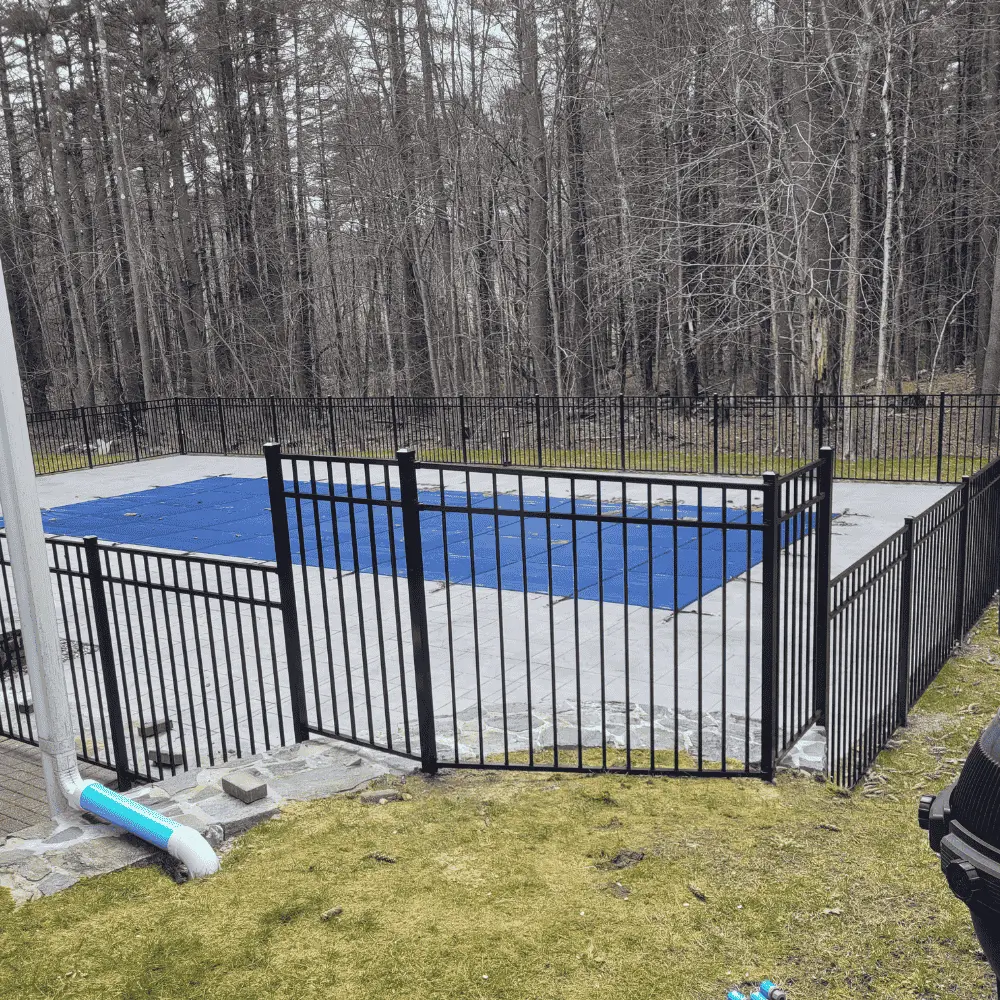
Aluminum is a practical option when homeowners want a defined pool barrier without visually closing off the area. Its open design maintains sightlines, which can be useful when you want to see the pool from another part of the yard.
Aluminum also requires relatively little routine maintenance and does not have the rot concerns associated with wood. For homeowners who value visibility and a clean, open appearance, it can be a good fit around a pool.
Vinyl Pool Fencing
Vinyl makes sense when privacy is a larger priority. Solid panels can create separation from neighboring properties and make the pool area feel more secluded. Vinyl also requires relatively little routine upkeep and will not rot from moisture exposure.
The tradeoff is visibility. A solid privacy fence can make it harder to see into or out of the pool area from other parts of the property. The layout should therefore be considered carefully rather than choosing solid fencing based on privacy alone.
Wood Pool Fencing
Wood provides a natural appearance and can be built in styles ranging from relatively open to fully private. That flexibility makes it possible to balance privacy and appearance around different types of properties.
It also requires more maintenance. Pool areas are already exposed to moisture, and New England weather adds rain, snow, freezing temperatures, and seasonal changes. Cleaning, staining, or sealing may be necessary over time to keep a wood fence protected and looking its best.
Decide How Much Privacy and Visibility You Want
Privacy and visibility often pull homeowners in opposite directions when choosing a pool fence. A solid fence can create a secluded outdoor area, particularly on properties with nearby neighbors or roads. An open design maintains sightlines and can help the pool feel connected to the rest of the yard.
Think about where you spend time when you are not in the pool. If you want to maintain visibility from a patio or another part of the yard, an open design may make more sense. If the pool sits close to neighboring properties and creating separation is more important, a privacy-oriented design may be preferable. The property layout should help guide that decision.
Consider Maintenance and New England Weather
Pool fencing in Southern New Hampshire and Northern Massachusetts needs to handle more than summer weather. Rain, snow, freezing temperatures, moisture, and repeated seasonal changes can all affect how a fence ages.
Wood generally requires the most ongoing care, while vinyl and aluminum typically need less routine maintenance. That does not make one material automatically better than another. Consider how much upkeep you are realistically willing to handle over the years, not just which material looks best when it is first installed.
Don’t Overlook the Pool Gate
The gate is a critical part of the pool barrier because it creates the point where people enter and leave the enclosed area. Its location should make sense for how you use the pool while still meeting the requirements that apply to the property.
Requirements may address details such as which direction the gate opens, latch placement, and whether self-closing or self-latching hardware is required. These details should be confirmed before installation. A pool fence should be planned as a complete barrier system, with the gate considered from the beginning rather than added as an afterthought.
Choose a Pool Fence That Fits Your Property
The right pool fence balances safety requirements with the way you want the space to look and function. Aluminum can maintain visibility with relatively low maintenance, vinyl can provide greater privacy, and wood offers flexibility and a natural appearance with more ongoing care. The best option depends on your pool area, property layout, maintenance preferences, and applicable requirements.
Projects by Pippert helps homeowners throughout Southern New Hampshire and Northern Massachusetts plan residential and pool fencing around their properties and priorities. If you are considering a new pool fence, contact Projects by Pippert to discuss your pool area, preferred materials, and property layout so the fence can be planned around both your goals and the requirements that apply to your property.