Key Takeaways
- Proper post depth helps prevent a fence from leaning, shifting, or becoming unstable over time.
- Fence height, design, soil conditions, and wind exposure all influence how posts should be installed.
- Frost depth is especially important in New Hampshire and Massachusetts because freeze-thaw cycles can contribute to post movement.
Fence posts provide the foundation for the entire fence. They need enough support in the ground to handle the weight of the fence, wind, changing soil conditions, and years of seasonal weather. Posts that are not installed appropriately may look fine at first but gradually begin to move as those forces add up.
There is no single post depth that works for every fence or property. A tall privacy fence has different support requirements than a shorter or more open fence, and rocky New Hampshire soil presents different challenges than loose or wet ground. Proper installation starts by considering the fence and the conditions where it will actually be built.
How Deep Should Fence Posts Be?
You may see general rules of thumb for fence post depth, but a single measurement should not be applied to every project. The appropriate depth depends on the height and weight of the fence, how much wind it will catch, the soil supporting the posts, and local frost conditions.
A tall solid privacy fence, for example, catches considerably more wind than an open fence. Its posts need to support those forces without gradually shifting. Local requirements can also affect installation, so post depth should be determined as part of planning the specific fence rather than treated as a standard measurement for every yard.
What Determines the Right Fence Post Depth?
The goal is to create enough support below ground for the fence that will be installed above it. Two of the biggest considerations are the fence itself and the ground supporting it.
Fence Height and Design
As a fence becomes taller or heavier, its posts generally need to handle more force. Solid privacy panels are particularly important to account for because wind cannot pass through them as easily as it can through chain link or other open designs.
Gates can place additional stress on posts because their weight is supported from one side and they move regularly. These differences are why post installation should reflect the fence design instead of using exactly the same approach for every section.
Soil and Ground Conditions
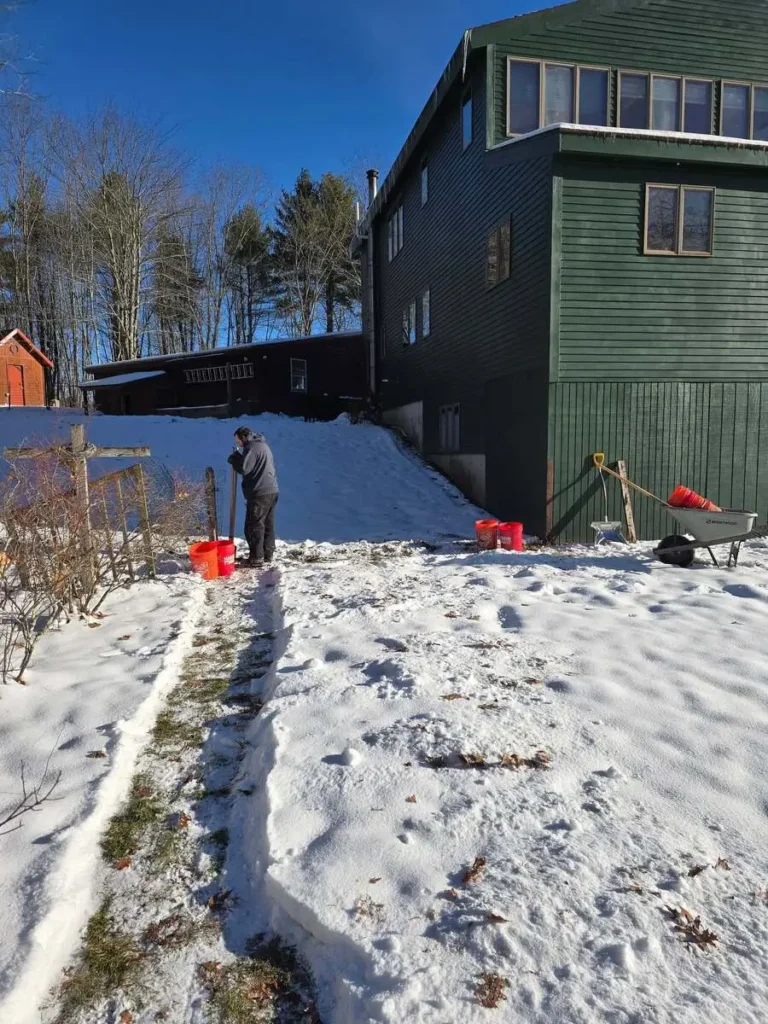
The ground can change considerably from one property to another. Loose or wet soil may not provide the same support as firm, well-draining ground, while rocks, roots, and ledge can make it more difficult to place posts where planned.
These conditions are common considerations throughout Southern New Hampshire and Northern Massachusetts. Evaluating the fence line before installation helps determine whether the soil, slope, drainage, or obstacles below ground will affect how individual posts need to be set.
Why Frost Depth Matters in New England
Winter creates another challenge for fence posts in this region. As moisture in the ground freezes, the soil can expand and move. When temperatures rise, it thaws again. Repeating this cycle season after season can gradually affect posts that are not installed appropriately for local conditions.
One potential result is frost heave, where ground movement pushes a post upward or causes it to shift. The change may be small at first, but even minor movement can affect the alignment of fence sections and gates. Accounting for local frost conditions during installation helps reduce the chance that seasonal ground movement will compromise the fence.
What Happens When Fence Posts Are Too Shallow?
Problems caused by inadequate post support do not always appear immediately. A newly installed fence can look straight and stable before movement becomes noticeable after strong winds or one or more New England winters.
Homeowners may eventually notice sections beginning to lean, posts moving in the ground, or gates that no longer latch correctly because their supporting posts have shifted. Solid fence sections may also become less stable during windy conditions. Once several posts begin moving, correcting the problem can require more than a simple adjustment.
Proper Post Installation Starts With the Property
Good fence installation should account for the property before digging begins. Fence height and material are important, but so are the slope of the yard, soil conditions, drainage, gate locations, underground obstacles, and local installation requirements.
That planning becomes particularly important on properties with rocky soil, uneven terrain, or areas that stay wet. Rather than applying the same post depth and installation method everywhere, the goal is to build the fence around the conditions it will face over the years.
Build Your Fence on a Strong Foundation
Post installation is one of the most important factors in how a fence performs over time. The right approach considers not only the fence above ground, but also the soil, frost, weather, and other conditions affecting the posts below it.
Projects by Pippert installs fences throughout Southern New Hampshire and Northern Massachusetts, where rocky soil, frost, and seasonal ground movement are regular considerations. If you are planning a new fence, request an estimate to discuss your property and fencing goals so the installation can be planned around the conditions of your specific yard.